Hallstatt, Austria: Beyond the Postcard
Hallstatt has been discovered — but it rewards the traveler willing to discover it properly.
Why Hallstatt Still Deserves Your Attention
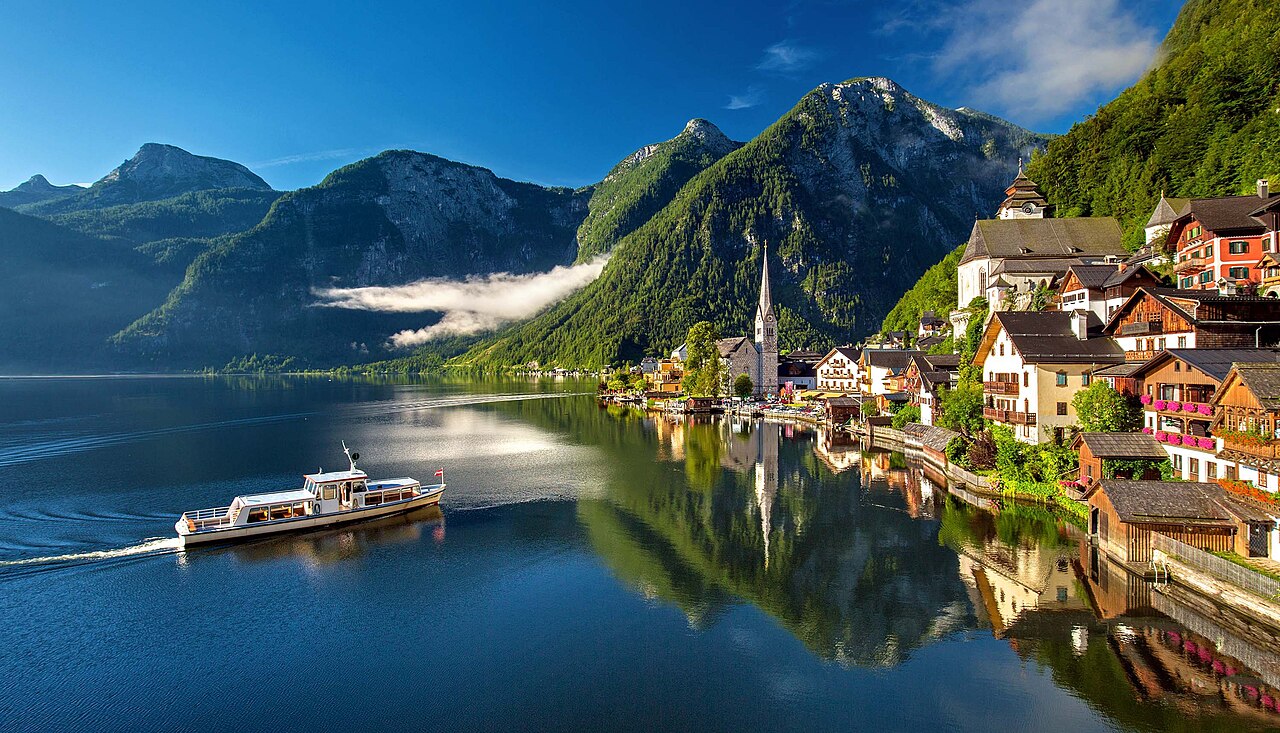
Here’s what the photograph can’t tell you: Hallstatt is the oldest continuously inhabited settlement in Austria. People have been living on this thin strip of land between the lake and the cliff since the Neolithic period, and by the early Iron Age (roughly 800-400 BCE), the salt mines in the mountain above the village made it one of the most economically important places in all of Central Europe. The word “Hallstatt” is derived from the Celtic word for salt, and the Hallstatt culture is an actual archaeological designation — a term used globally to describe an entire period of European prehistory, named after this tiny village.
The Salzwelten salt mine tour is not a theme park attraction. It’s a genuine descent into a mountain that has been actively mined for 7,000 years. The oldest wooden staircase in the world was found here.
Hallstatt is, in other words, a place of serious substance. The challenge is reaching it when it can be experienced rather than simply queued through.
Getting There
Hallstatt sits in the Salzkammergut lake district in Upper Austria, about 75km southeast of Salzburg. By train, take the service from Salzburg or Vienna toward Attnang-Puchheim, then change for the Hallstatt Bahnhof stop — but this station sits across the lake from the village itself. A small ferry (included in the train ticket zone) crosses in 5 minutes.
By car, the drive from Salzburg takes about 1.5 hours through one of the most beautiful landscapes in Europe. Parking is strictly regulated: day visitors must book parking in advance (Hallstatt has a parking reservation system operating in peak season). Alternatively, park in Lahn and walk the lakeside path.
Many visitors do Hallstatt as a day trip from Salzburg, which is fine — but staying overnight transforms the experience entirely.
Where to Stay
The village has fewer than 800 permanent residents and a limited selection of accommodation, which means booking early is essential.
Seehotel Grüner Baum is the classic choice — a lakeside hotel with a long tradition of hosting the famous and the curious, rooms with direct lake views, and an excellent restaurant. Heritage Hotel Hallstatt is a newer boutique option carved into the traditional architecture. Budget travelers can find rooms at guesthouses (Pension Sarstein has a strong reputation) on the upper village streets.
The key is this: book months in advance for summer, and consider shoulder seasons seriously.
What to Do
The Hallstatt Salt Mine (Salzwelten) is the essential experience. The tour descends into a mountain via a 7th-century miners’ staircase, slides down wooden mining chutes (genuinely fun), and tells the story of 7,000 years of continuous mining. The world’s oldest wooden staircase — about 3,000 years old, still structurally sound — is displayed here. The tour takes about 2 hours.
The Ossuary (Beinhaus) is one of the strangest and most oddly beautiful sights in Austria — a small chapel next to the parish church containing a collection of painted human skulls. The practice arose because Hallstatt’s cemetery has always been too small for the village; bones were exhumed after 10-15 years, bleached, and decorated with the names and occupations of the deceased. It’s humbling, a bit haunting, and strangely personal.
Walk the Echern Valley above the village — the trail begins near the market square and climbs through forest to the Waldbachstrub waterfall. In spring, the waterfall is fed by snowmelt and genuinely dramatic. The walk takes about 1.5 hours return and gets you above the village crowds entirely.
The Hallstatt Museum (Museum Hallstatt) is small but excellent, with original finds from the salt mines and Iron Age cemetery that give real context to the prehistoric culture named after this place. It’s worth 90 minutes.
Evening on the lakeside promenade after the day-trippers leave. The light on the water in the hour before sunset — the Dachstein massif reflecting in the lake, church bells, the smell of the surrounding forest — is what you came for.
Local Tips
Best Time to Visit
Late May to early June offers the best combination of reliable weather, long days, green alpine slopes, and manageable crowds — the summer peak hasn’t fully arrived. September is arguably the finest month: golden light, cooler temperatures, post-summer crowd relief, and the surrounding mountains beginning to show color. December through February is genuinely magical — the village under snow, frozen edges on the lake, dramatically reduced crowds, and the Christmas market in December worth the cold. Summer (July-August) has the best weather but the worst crowds; if you come then, stay overnight and own the village for the hours when the day-trippers are gone.
Travel Magellan is Bennico’s guide to the world’s most compelling destinations — the ones that reward slow travel and curious minds.
What to Pack
Heading to Hallstatt, Austria for Village & Lake Guide? Here’s what to bring: Mirrorless Camera for Travel Photography, Polarized Lens Filter Photography, Waterproof Rain Jacket, Comfortable Hiking Shoes, Travel Tripod Compact. Pack light but smart — village & lake guide demands the right kit.
Book This Adventure
Tours and experiences for Hallstatt, Austria:
- Hallstatt Day Trip from Salzburg with Panorama Tours – GetYourGuide
- Hallstatt Lake Boat Tour & Salt Mine Visit – Viator
Where to Stay
Recommended accommodation in Hallstatt, Austria:
- Heritage Hotel Hallstatt – Booking.com
- Seehotel Grüner Baum Hallstatt – Booking.com
Don’t Skip This
Adventure travel requires proper insurance. World Nomads covers everything from volcano boarding to heli-skiing.
Get a Quote →
Affiliate link — we earn a commission at no extra cost to you.