Matera, Italy: The City That Refused to Die
In 1952, the Italian prime minister called Matera “a national shame.” The cave dwellings of the Sassi — carved into the ravines of Basilicata over thousands of years, inhabited by as many as 15,000 people — were deemed a humanitarian crisis. Malaria, overcrowding, children sharing caves with livestock. The Italian government forcibly relocated the entire population to concrete housing blocks on the plateau above. The ancient city was emptied.
For decades, the Sassi sat hollow, a ghost town carved from golden limestone. Then, slowly, people came back. Not to live the old way, but to understand what had been built here over eight millennia. UNESCO arrived in 1993. The European Capital of Culture designation followed in 2019. And now, the caves that were once called Italy’s shame are its most astonishing cultural artifact — boutique hotels and restaurants reclaiming spaces where Bronze Age families once sheltered.
Matera is not a comfortable destination. It demands something from you. But it is one of the most profoundly moving places in Europe.
Why Matera Is a Destination Apart
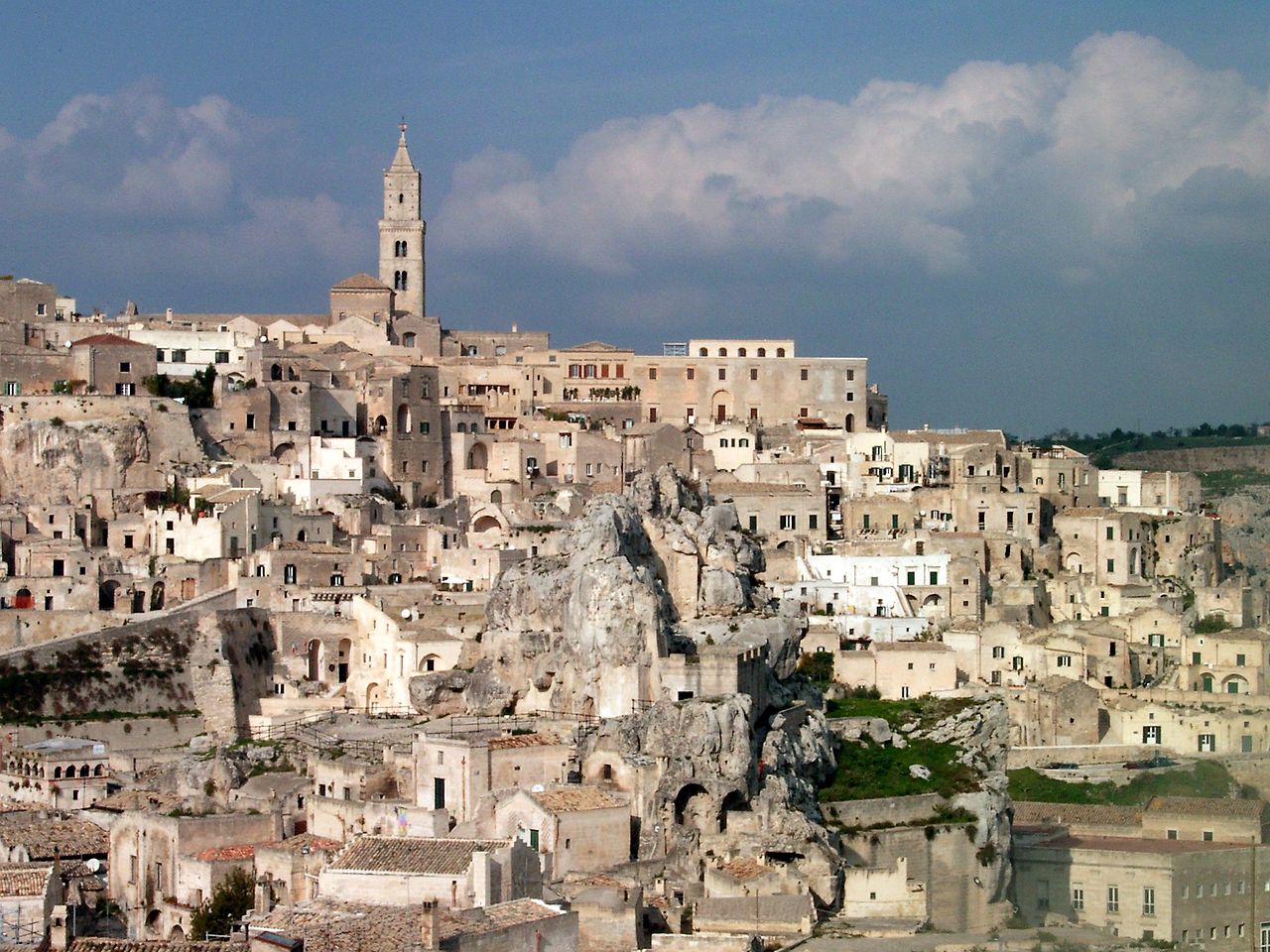
Forget Rome. Forget the Amalfi Coast. Matera is Southern Italy at its most austere and most extraordinary — a city of raw limestone and ancient light that looks, from the right angle, like Jerusalem reimagined in southern stone. The two Sassi districts — Sasso Caveoso and Sasso Barisano — are carved into opposite walls of a ravine called the Gravina, and the view from the plateau above, looking down into a city of tiered stone dwellings, remains one of Italy’s most breathtaking sights.
What makes Matera different from similar “ancient city” destinations is that it was genuinely lived in — not built as a monument, but as a practical solution to a difficult landscape, generation by generation, cave by cave, church by church. There are over 150 rock-cut churches here, many painted with Byzantine frescoes. People carved homes beneath homes, cisterns beneath cisterns, a vertical city of unbelievable complexity. Standing in a cave that has seen 9,000 years of human habitation creates a very particular silence.
Getting There
Matera is famously difficult to reach, and that’s part of what keeps it from being overwhelmed. The nearest airports are Bari (BRI) (about 65 km away, 1 hour by car) and Naples (NAP) (3 hours by car). From Bari, there’s a reasonably regular bus service (FlixBus and Marozzi) or a combination of local train to Altamura and then bus to Matera. The easiest option is renting a car — driving into the Sassi from the plateau above at twilight, watching the whole city glow amber, is an experience in itself.
High-speed rail from Rome or Naples reaches Bari, from where you transfer. Budget at least 4-5 hours from Rome by transit.
Where to Stay
The caves are now where you want to sleep. Sextantio Le Grotte della Civita is the gold standard — a minimalist hotel carved directly into the Sassi, with cave rooms lit by candles and stone, WiFi-free silence, and a commitment to preserving the atmosphere of the original dwellings. It’s expensive but singular. Palazzo Gattini sits on the cathedral square with more conventional luxury. Mid-range: Il Belvedere has clean, simple rooms with terrace views over the entire Sassi that cost a fraction of the luxury options.
Stay within the Sassi or adjacent historic center. The modern city on the plateau has nothing to offer your experience.
What to Do
Walk the Sassi in the early morning and at night. These are the only times the narrow lanes belong to you rather than the day-tripping crowds who pour in on coach tours from the coast. At dawn, cats pick their way across sun-warmed stone. At night, subtle lighting makes the whole ravine glow gold, and the sound of your own footsteps on carved limestone is the only soundtrack.
Casa Grotta di Vico Solitario is a preserved cave dwelling in Sasso Caveoso that shows exactly how families lived here — a single cave partitioned into kitchen, stable, sleeping quarters, with a cistern below. It’s sobering and necessary context for everything else you see.
The rock-cut churches are scattered throughout both Sassi districts — look for the Madonna de Idris church carved into a rock pinnacle, and the Cripta del Peccato Originale (Crypt of Original Sin), a cave church about 15km from Matera with 8th-century frescoes of such quality they’ve been called the “Sistine Chapel of rock-cut churches.”
The Gravina ravine itself is accessible via several paths down from the Sassi — the view looking back up at the cave city from the canyon floor is completely different from the plateau panoramas above. An hour of exploration here will find you Byzantine crosses carved into rockfaces and cistern openings that drop into darkness.
The Matera rooftops — there are several terraces accessible from within the Sassi where you can sit with a glass of Aglianico wine and watch the light change on the stone. The terrace of the Ristorante Il Terrazzino has one of the better views in town.

Local Tips
Best Time to Visit
April-May and September-October sit in the sweet spot: warm days (18-25°C), long evening light, and fewer crowds than peak summer. Summer (July-August) brings intense heat — the pale limestone reflects and stores it — and coach-tour congestion. Winter is quiet and can be cold, but the deserted Sassi in fog or thin snow is genuinely haunting and worth considering if you’re more interested in atmosphere than comfort. Matera’s Feast of the Madonna della Bruna (July 2nd) is spectacular if you can tolerate the summer heat for it.
Travel Magellan is Bennico’s guide to the world’s most compelling destinations — the ones that reward slow travel and curious minds.
What to Pack
Heading to Matera, Italy for Sassi Cave City Guide? Here’s what to bring: Sturdy Walking Shoes Cobblestone, Camera with Wide Angle for Architecture, Reusable Shopping Bag, Travel Guidebook Italy Southern, Portable Phone Charger Power Bank. Pack light but smart — sassi cave city guide demands the right kit.
Book This Adventure
Tours and experiences for Matera, Italy:
- Matera Sassi Cave City Walking Tour with Local Guide – GetYourGuide
- Matera Underground Cisterns & Sassi Experience – Viator
Where to Stay
Recommended accommodation in Matera, Italy:
- Sextantio Le Grotte della Civita Matera – Booking.com
- Palazzo Gattini Luxury Hotel Matera – Booking.com
Don’t Skip This
Adventure travel requires proper insurance. World Nomads covers everything from volcano boarding to heli-skiing.
Get a Quote →
Affiliate link — we earn a commission at no extra cost to you.